Second of a Three-Part Series
DAN LOOKS BACK
Regards from Broadway Rose
Summer 2026
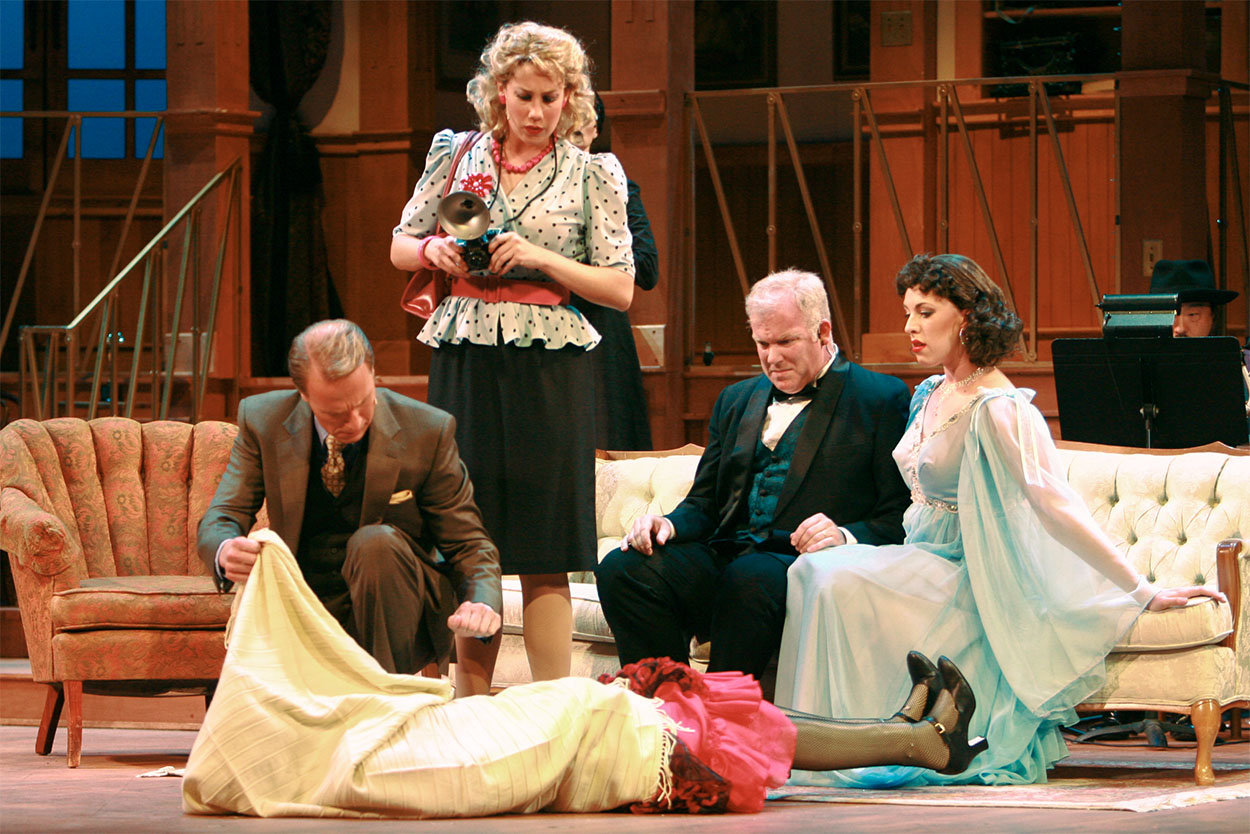
Dan Murphy in The Case of the Dead Flamingo Dancer—a last-minute replacement show. Photo by Craig Mitchelldyer.
In this second installment of Dan Looks Back, Broadway Rose co-founder and Managing Director, Dan Murphy, reflects on some of the company’s defining moments in the early 2000’s–from unexpected box office breakthroughs and community partnerships to finding a permanent home and laying the groundwork for Broadway Rose’s future.
Q: Broadway Rose’s first sellout came somewhat unexpectedly. What happened?
Dan: Our first sell out was Phantom in 2001. We had cast Margie Boule as Carlotta, and she was a huge local celebrity because she hosted AM Northwest. She went on the show to talk about our production, and they aired some footage from the musical. I remember getting back to the theater afterward and finding dozens of messages from people wanting tickets. We called it “Phantom Fever” because her interview completely tipped the scales. Suddenly tickets were flying off the shelf, and we sold every seat. It was the first time we experienced that kind of demand.
Q: So, when you didn’t have a morning show host in the cast of a show, how did Broadway Rose grow their audience in the early years?
Dan: Sometimes opportunity came from unexpected places. When the Musical Theatre Company closed in 2002, they shared their mailing list with other theatres. We reached out to patrons who had lost tickets when their season was canceled and offered to exchange those tickets for Broadway Rose performances. It wasn’t a huge moneymaker, but it introduced us to a lot of people who had never seen our work before. Many longtime patrons first discovered Broadway Rose through that effort.
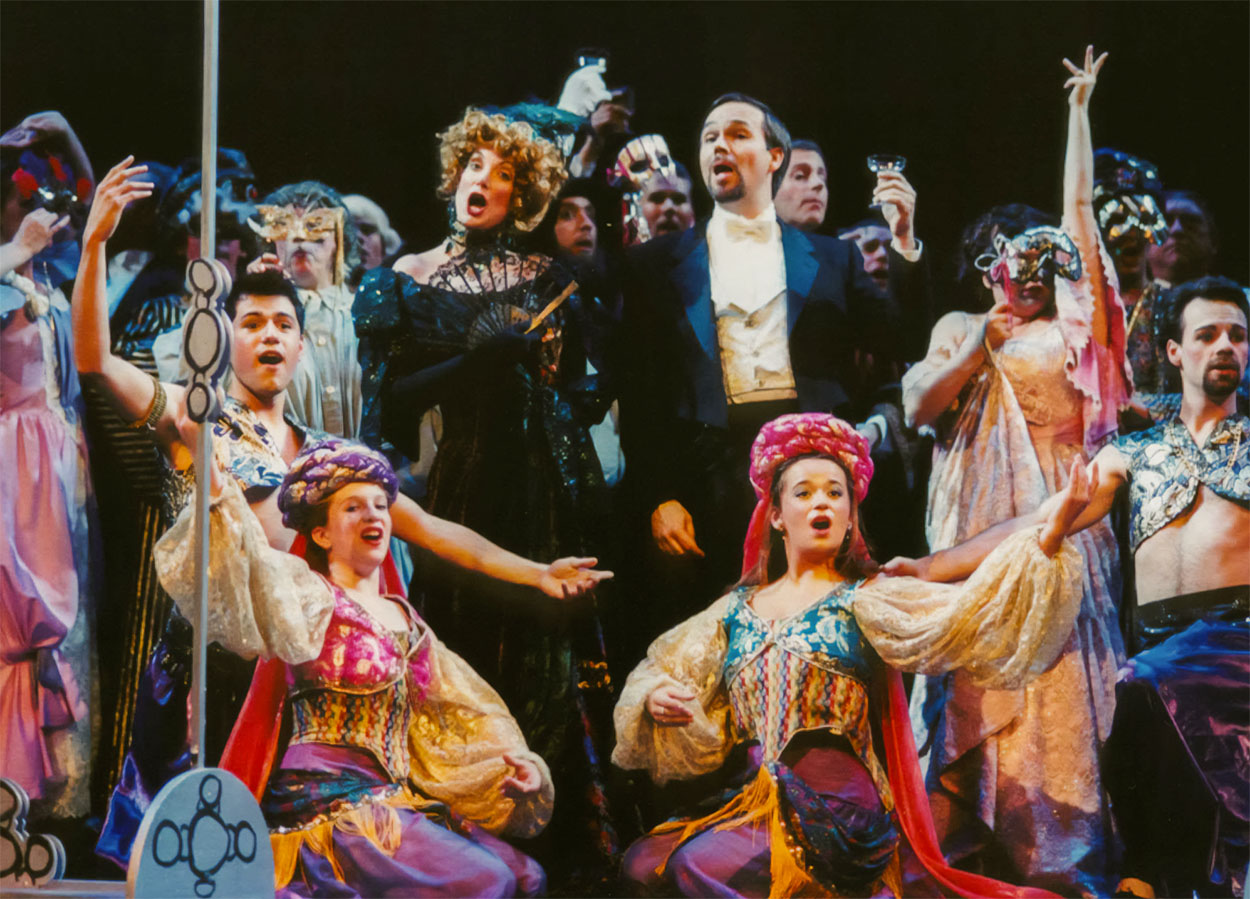
Phantom (2001) was the first sellout show of many to come. Photo by Owen Carey.
Q: At what point did you realize Broadway Rose was here to stay?
Dan: It probably took ten years. When Sharon and I moved here in the early ‘90s, we still thought we’d eventually return to New York. But after 9/11, and as our family grew roots in Oregon, we started to see things differently. We loved the quality of life here, and many of our friends had scattered from New York anyway. Around that time, we realized we’d made the right decision raising our family here and that Oregon and the theatre had become our future.
Q: Before Broadway Rose had a permanent home at the New Stage and was only a summer stock company, how did you prepare audiences for becoming a year-round theatre?
Dan: We knew that if we ever wanted to operate year-round, we couldn’t just flip a switch and expect people to follow us. So, we started creating reasons for audiences to see us outside the summer season. We added a Christmas show, launched a play reading series in the fall, and presented cabarets in the spring. It was all about building the habit. We were teaching people that Broadway Rose wasn’t just a summer theatre company– it was something they could enjoy all year long.
Q: Can you tell me what it was like seeing the building that would become the New Stage for the first time?
Dan: Susan Stark-Haydon from the Tigard-Tualatin School District knew that we were keeping an eye out and encouraged us to take a look at C.F. Tigard. They had an old and unused building that had served as their cafeteria and auditorium years in the past. When Sharon and I walked through it, it had been sitting abandoned for years. There were bottles and debris everywhere. It wasn’t terrible, but it was not great. Still, we looked around and thought, “We can make this work.” That moment really set everything in motion. We had savings put aside but we realized we were ready to embark on a capital campaign. We knew it was going to be hard, and first we had to tell the staff. Thankfully our small but mighty team was ready for action. We read books, talked to people, and started figure out what we were doing. There was a silent phase where we reached out to some of our bigger donors and eventually, we took it to the masses. Sharon and I became a “party in a box” so to speak. People would have parties at their house and Sharon and I would go, sing a song or two, talk about the theatre, share the schematic and thankfully people were willing to join our cause.
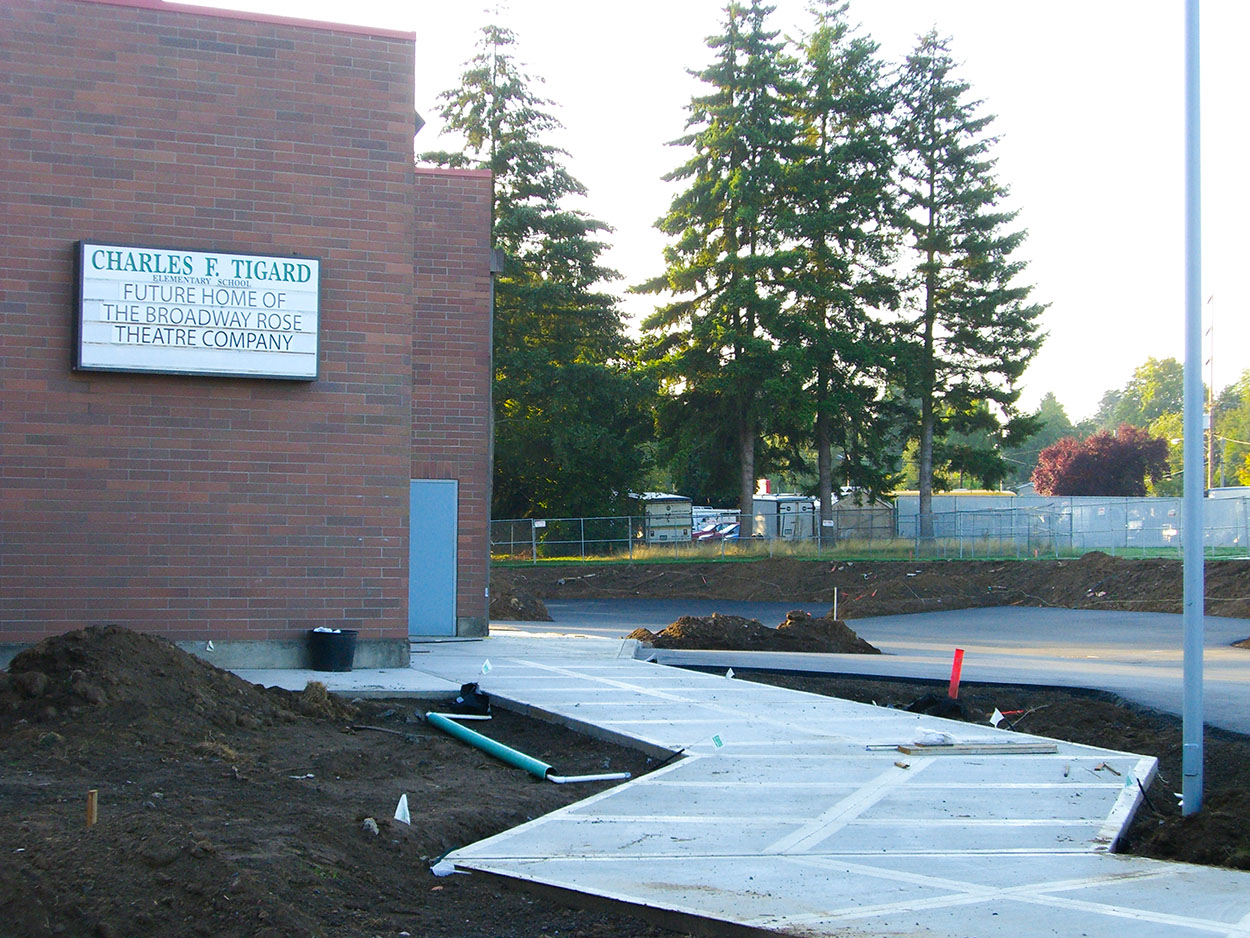
The future home of Broadway Rose Theatre Company during renovations in 2008.
Q: What do you remember most about opening the New Stage in 2008?
Dan: December 5th was our D-Day, and I remember chaos. We were still moving boxes and finishing details on the day of our first preview. At 2 p.m. we still didn’t have occupancy approval from the city, and we had hundreds of people arriving that evening. Sharon was following the inspector around the building while all of us waited anxiously. When he finally signed off, it was basically, “Go!” Somehow, we pulled it together and opened the building that night with Celebrate Home, a sort of Christmas card to our audiences.
Q: How did Broadway Rose end up producing Les Misérables?
Dan: It happened completely unexpectedly. I was alone in the office when MTI called and said they were opening up the rights to just 24 theatre companies across the country. They needed an answer immediately. I said yes on the spot and then had to wait for everyone else to come back to the office and tell them we'd be doing Les Misérables instead of Guys and Dolls. Thankfully, everyone was thrilled.
Q: Broadway Rose has become known for producing new works. What was it like presenting your first world premiere, Ripper?
Dan: Ripper was a huge leap for us. It was not only a world premiere, but also our first production that came through our involvement with the National Alliance for Musical Theatre (NAMT). New works are exciting because you're creating something from the ground up, but they're also terrifying because there isn't a blueprint. We added extra rehearsal time, worked closely with the creative team, and learned a tremendous amount through the process.
Q: Was there ever a production that almost didn't happen?
Dan: Absolutely. In 2006 we had announced Little Shop of Horrors, sold thousands of tickets, and then suddenly lost the rights because a touring production was coming through the region. We had to scramble and replace it with The Case of the Dead Flamingo. Fortunately, our patrons stuck with us, and the show turned out to be a lot of fun. It was a stressful lesson in always having a backup plan.
Q: Looking back on this period in Broadway Rose's history, what stands out to you the most?
Dan: When I think about those years, what stands out is that we were constantly building—building audiences, building trust in the community, building a home, and ultimately building the future of Broadway Rose. There were certainly challenges and more than a few moments when we were making things up as we went along, but we always believed in what we were creating. Looking back now, it's amazing to see how many people believed in that vision and helped make Broadway Rose what it is today.