First of a Three-Part Series
DAN LOOKS BACK
Regards from Broadway Rose
Spring 2026
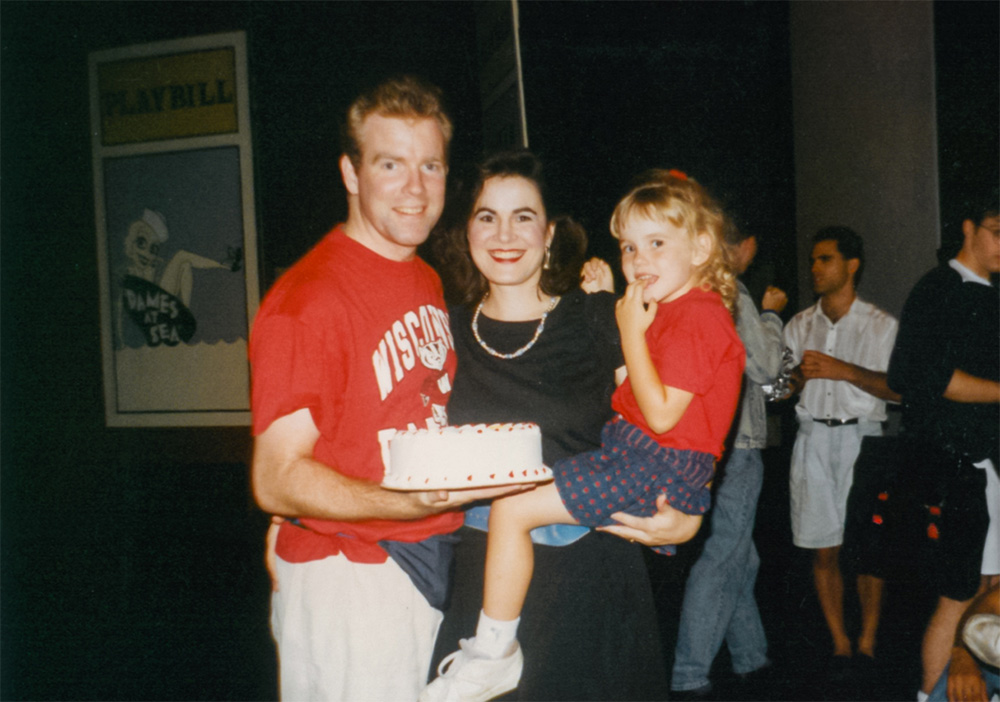
Dan Murphy, Sharon Maroney, and their daughter Megan celebrating Dan's birthday in 1992
As Broadway Rose Theatre Company celebrates decades of musical theatre magic, Founding Managing Director Dan Murphy takes a reflective look back before his retirement at the end of this year. In this three-part series, Dan revisits the company’s origins—before stages were built, before audiences filled the seats, and before Broadway Rose became a cornerstone of the Tigard community. From humble beginnings as nomadic actors to founding a theatre out of sheer ambition, he shares the stories, struggles, and small victories that shaped the company’s remarkable journey.
Blythe: Take me back to the very beginning—before Broadway Rose. What did life look like for you and Sharon?
Dan: We were actors—that’s what we did. Sharon and I met doing Joseph and the Amazing Technicolor Dreamcoat—she was the narrator, I was in the chorus. I like to joke that the leading lady was carrying on with a chorus boy. After we got together, we just kept working wherever the jobs were: New York, summer stock, all over. We weren’t married yet, no kids, so we could just pick up and go. It was a very nomadic existence.
B: What changed? What made that lifestyle no longer work?
D: Our daughter, Megan. That really shifted everything. The moment that sticks with me is the summer of 1991—Sharon was working in Pennsylvania with Megan, and I was in New Hampshire. I didn’t see Megan all summer. When I got home, she followed me everywhere. And I thought, “We can’t keep doing this. If we want to stay together as a family, we’re going to have to create it.”
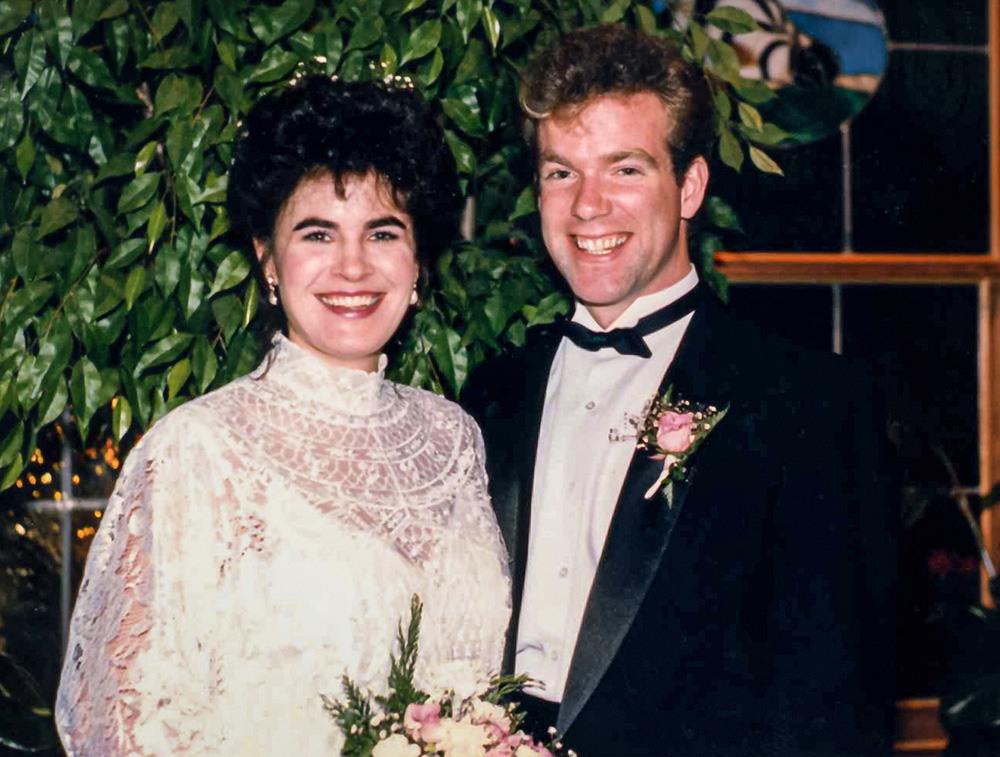
Sharon and Dan on their wedding day, ready to start their lives (and a theatre company) together
B: So how does that realization turn into starting a theater company?
D: Honestly? Kind of by accident. A friend of ours mentioned that Portland didn’t have summer stock theatre. And we thought, “Well… why not?” We were young, a little cocky, and didn’t know any better. So, in November of 1991, sitting in a Greenwich Village apartment, we incorporated a theater company. Suddenly, I had a company—even though I hadn’t been to Oregon yet.
B: What do you remember about that first trip out here?
D: I came out in January to find a performance space. I couldn’t have pointed to Oregon on a map before that. But we found the Deb Fennell Auditorium at Tigard High School. The district was letting in district nonprofits use it for free at the time, and we thought that was a good price. We said “Okay, this is it. Let’s go.”
B: What was that first season actually like?
D: Controlled chaos. We flew in actors from New York, hired the Tigard High tech crew to run the productions because we didn’t know how to do it ourselves, and just went for it. We’d rehearse one show during the day, perform another at night, and be prepping the next one at the same time. It was nonstop.
We didn’t have cell phones or computers. There was one phone in a garage. Our programs were just folded pieces of paper. And I was driving this van with no seats—just a floor—and the actors would sit in the back for the ride to the theater every day.
B: Were audiences there from the beginning?
D: Not exactly. I remember a Saturday matinee of Joseph where we had 30 people in the audience. Thirty. But you know what? We were grateful for those 30 people. That never really changes.
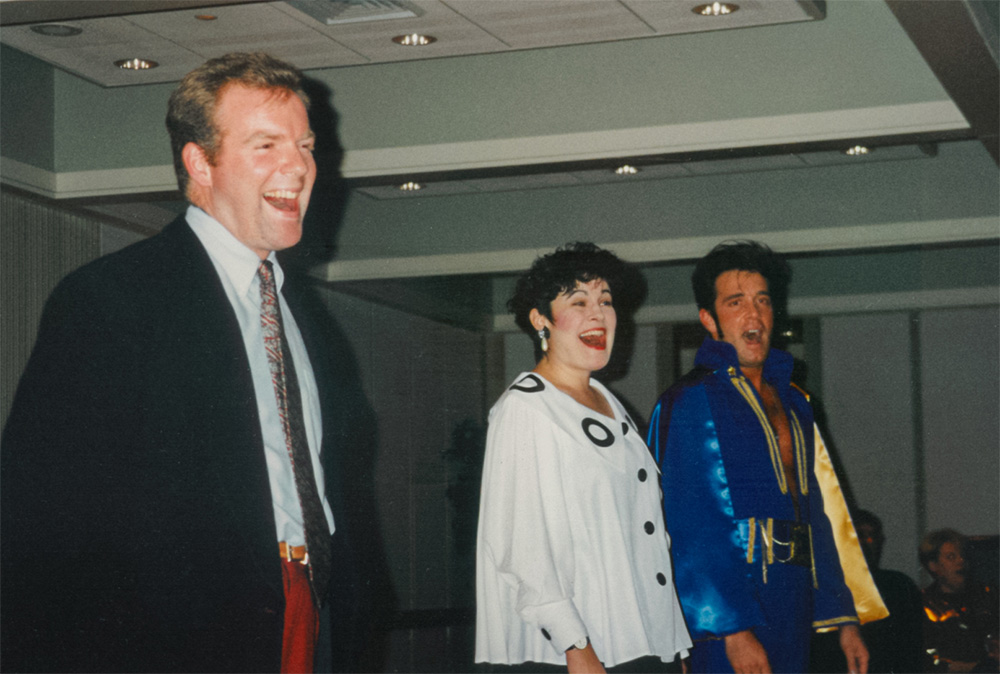
Dan and Sharon performing with the "pharaoh" from Joseph and the Amazing Technicolor Dreamcoat
B: At the end of that first summer, did you know you were coming back?
D: No, not at all. We went back to New York thinking, “That was a lot.” It was stressful, it was exhausting—we weren’t sure it was sustainable. And then Sharon got pregnant with our second daughter, Molly. So we said, “Okay. Let’s go to Tigard, raise the kids, and we’ll move back to New York when the youngest turns 18.”
That was the plan. Molly is 32 now and here we are.
B: And what did those early years in Tigard look like?
D: A lot of hustle. I was waiting tables: Jake’s Backstage, the Portland Spirit, wherever I could. Sharon was home with two kids, writing grants on a typewriter, and teaching herself how to run a nonprofit. Nobody was really getting paid. We were the biggest volunteers you’ve ever seen.
B: When did it start to feel like Broadway Rose might actually last?
D: It took a while. We joined the Chamber, talked to Rotary clubs, and introduced ourselves to anyone who would listen. People thought we were a little crazy at first—asking them to come sit in a dark room in the middle of summer, out in the suburbs. But little by little, audiences grew. Local actors got involved. The community started to take ownership of the theatre. And somewhere along the way, it stopped feeling temporary.
B: Looking back now, what do you think made it work?
D: We didn’t know enough to be afraid. We had a lot of chutzpah and a lot of ignorance. But we showed up, we did the work, and people showed up too.
That’s how it started.